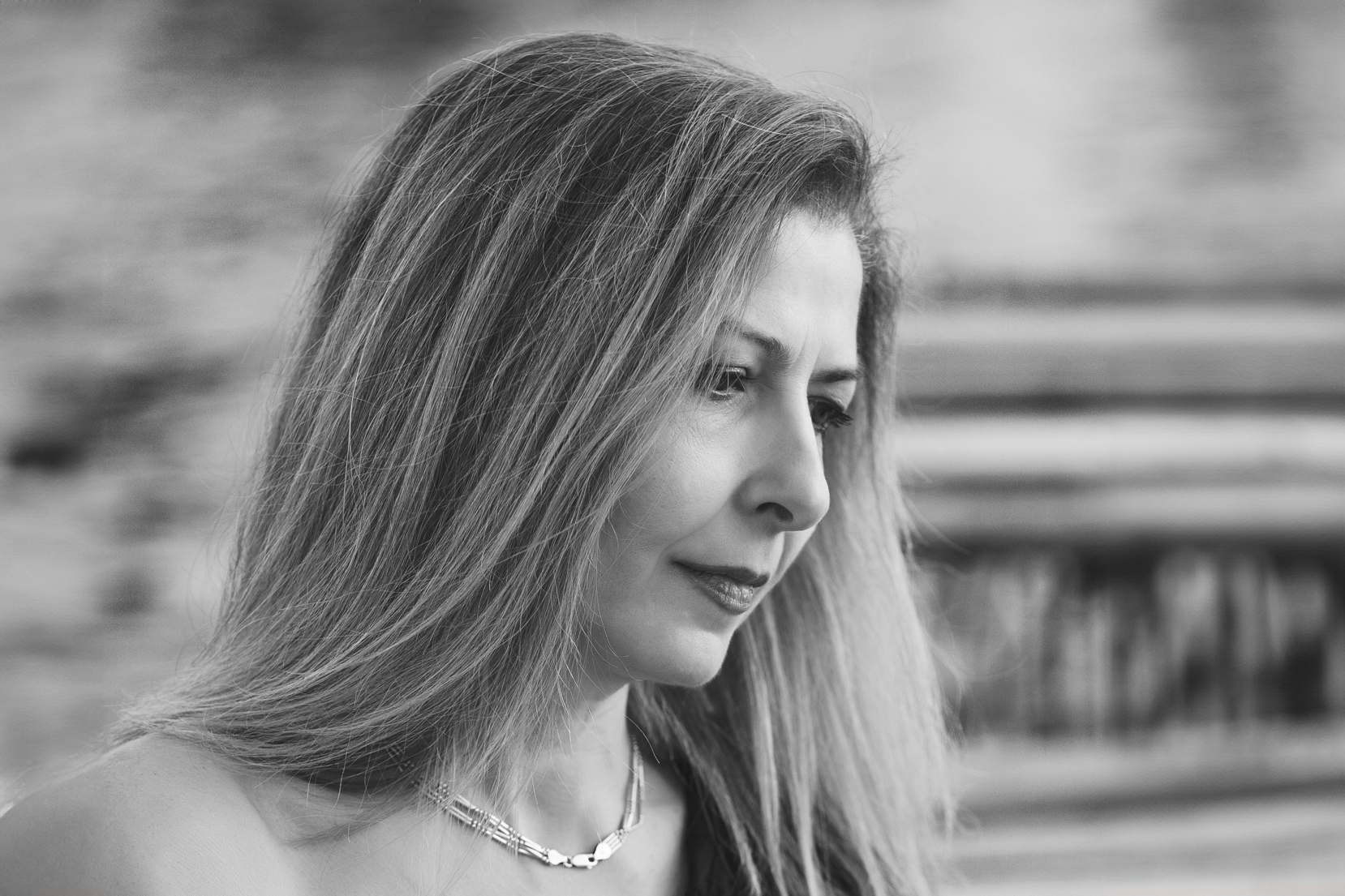
I was born in Germany, the daughter of Greek immigrants. From an early age, I was fascinated by the world of photography, even though my first photographs were often “failures”: heads cut off, only feet in the frame, or empty spaces with someone accidentally standing at the edge of the image.
When I settled permanently in Greece, specifically in Thessaloniki, I decided to attend photography classes at NELE, where I began to understand the technique and aesthetics of the image. It was there that my deeper relationship with photography was born — not only as a way of capturing a moment, but also as a means of expression. I continue to learn, to observe, and to photograph whatever moves me.
Tana
1. Portrait photography is a form of dialogue between the photographer and the subject. How do you approach that dialogue, and what interests you most in the person you photograph?
For me, portrait photography is, above all, a relationship of trust. Before I raise the camera, I try to get to know the person in front of me. I am not interested in the perfect image. I am interested in capturing something true: a look, or a moment, that reveals their inner world.
2. Natural light has an uncontrolled, almost organic quality. How does this affect your process? Is it, for you, a means of pure documentation, or a way of revealing something deeper about the person you photograph?
Natural light gives me freedom. I cannot fully control it, but that helps me work more spontaneously. It makes me adapt, observe, and respond. It can completely change the emotional intensity of a portrait — softening an expression or bringing emphasis to something barely perceptible.
3. In an age where images of women are often shaped by social stereotypes and filters of perfection, how does your own gaze through the lens seek to reveal something more truthful or personal?
I am not interested in presenting an idealised version of women. On the contrary, I care about showing who they truly are. Through photography, I try to make space for their personal gaze, for the truth they carry, even when that truth is vulnerable or imperfect.
4. Do you believe that portrait photography is also a form of self-expression for you as a creator? And if so, what does each portrait you make reveal about you?
Yes, portrait photography is also a form of self-expression for me. Through every face I photograph, I reveal something of myself as well: the way I see people, what touches me, what I consider important. It is a quiet but meaningful exchange.
5. If you could photograph any woman in history, in any natural environment, who would it be and why? How would you want to light her, and what story would you want your image to tell?
I would choose Helen Keller. She is a woman who moves me deeply, not only because of what she overcame, but because of the strength and clarity with which she perceived the world. I would like to photograph her in a quiet natural setting, with soft natural light, and capture her radiant smile — not simply as a sign of joy, but as a symbol of inner strength and faith.
Enjoy more photographs by Tana Athanasiadou through her social media accounts: Instagram: @tanaathana Facebook: @tana.athana.1
Pixelscape.gr uses cookies to ensure that provides you with the best possible navigation experience. By using the website you accept the usage of cookies. Press “Accept”, if you condone the usage of cookies.
This website uses cookies to improve your experience while you navigate through the website. Out of these, the cookies that are categorized as necessary are stored on your browser as they are essential for the working of basic functionalities of the website. We also use third-party cookies that help us analyze and understand how you use this website. These cookies will be stored in your browser only with your consent. You also have the option to opt-out of these cookies. But opting out of some of these cookies may affect your browsing experience.